
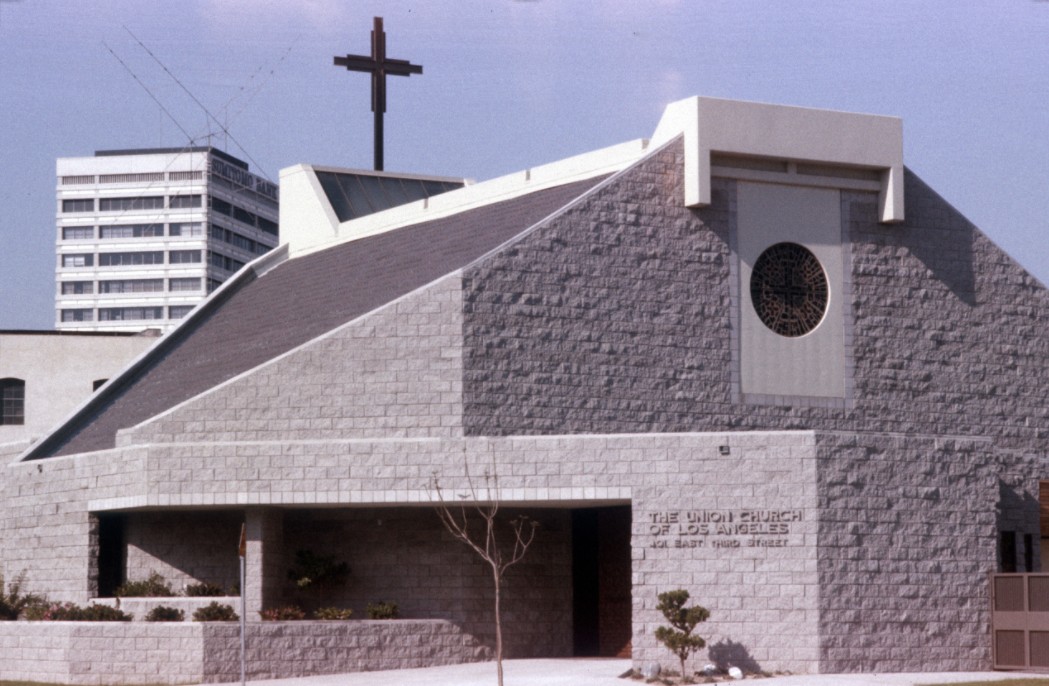
Union Church of Los Angeles has a deep and meaningful history rooted in the Little Tokyo community. For decades, the church has served as a spiritual home for generations of worshippers, reflecting both the cultural richness and resilience of the neighborhood it calls home.
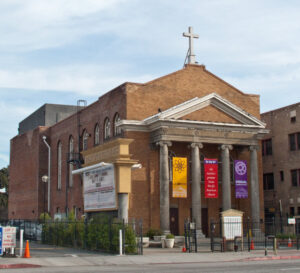
Founded in 1918 as the Japanese Union Church of Los Angeles, the church was originally located at 120 N. San Pedro Street, just a few blocks from its current site. This historic building, built in 1923 and now known as the Union Center for the Arts, is designated as Los Angeles Historic-Cultural Monument #312 and continues to stand as a lasting symbol of the church’s early presence in Little Tokyo.
 In its early years, the church was part of a growing network of Japanese American religious institutions in Los Angeles, alongside organizations such as Koyasan Buddhist Temple (1912) and Hompa Hongwanji Buddhist Temple (1925). Together, these institutions helped form the spiritual and cultural foundation of the Little Tokyo community.
Up until the 1970s, the church remained at its original San Pedro Street location, serving as a central gathering place where faith, culture, and community life were closely intertwined. Through times of growth, hardship, and change—including significant moments in the history of Japanese Americans in Los Angeles—the church remained a steady presence.
As the neighborhood evolved, the church transitioned to its current location, beginning a new chapter while continuing to honor its deep roots. Today, Union Church of Los Angeles carries forward that legacy, welcoming a diverse congregation from across the region.
With both English and Japanese ministries, the church reflects its historic commitment to serving a multicultural community. This dual-language presence is not only a reflection of its past, but also an ongoing expression of its mission to bring people together in faith.
Grounded in its history and committed to its future, Union Church of Los Angeles continues to be a place of worship, connection, and service for generations to come.